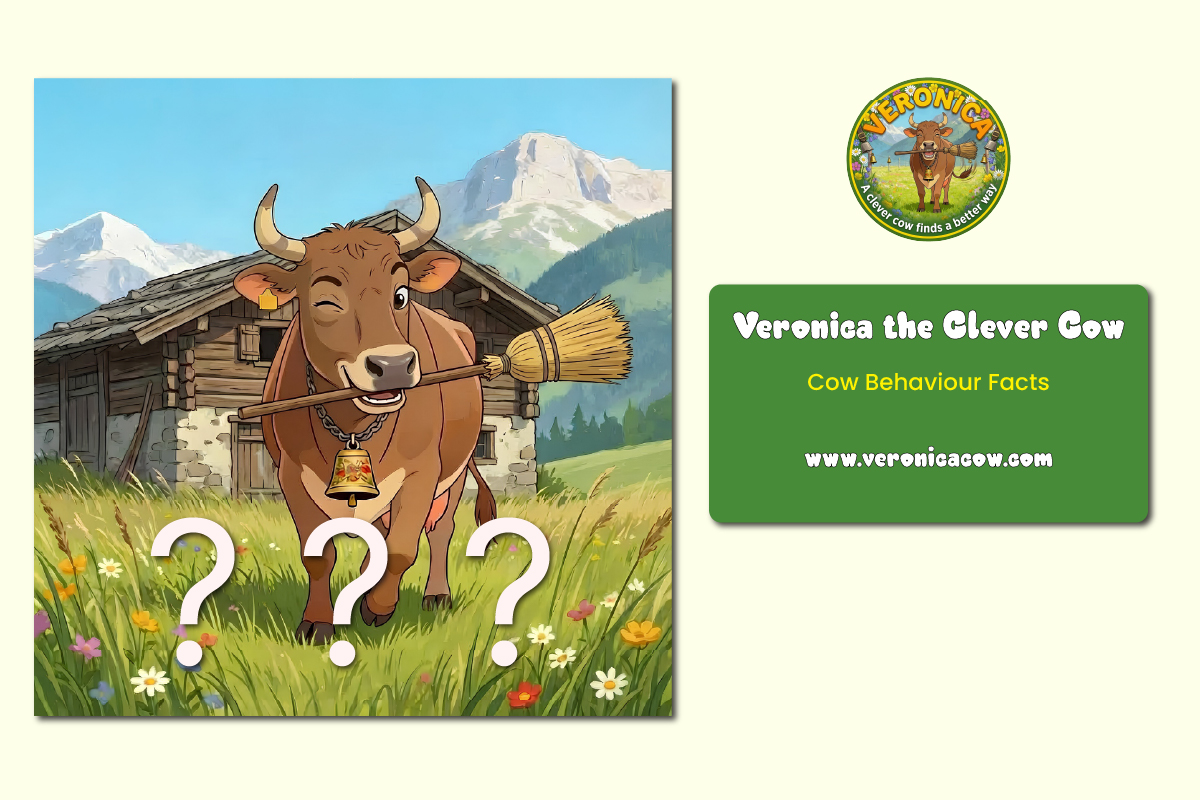
Cow behaviour facts are some of the most surprising things children can learn about animals. Cows look quiet from a distance. They look as though they spend their days simply standing in a field. Look closer, and what is actually going on is far more interesting — and well worth a child knowing about.
Here are six cow behaviour facts that genuinely surprise children, parents, and teachers when they hear them for the first time. Each one is drawn from real animal behaviour science and welfare research, and each one helps explain why Veronica the cow in the Veronica the Clever Cow series acts the way she does in the books.
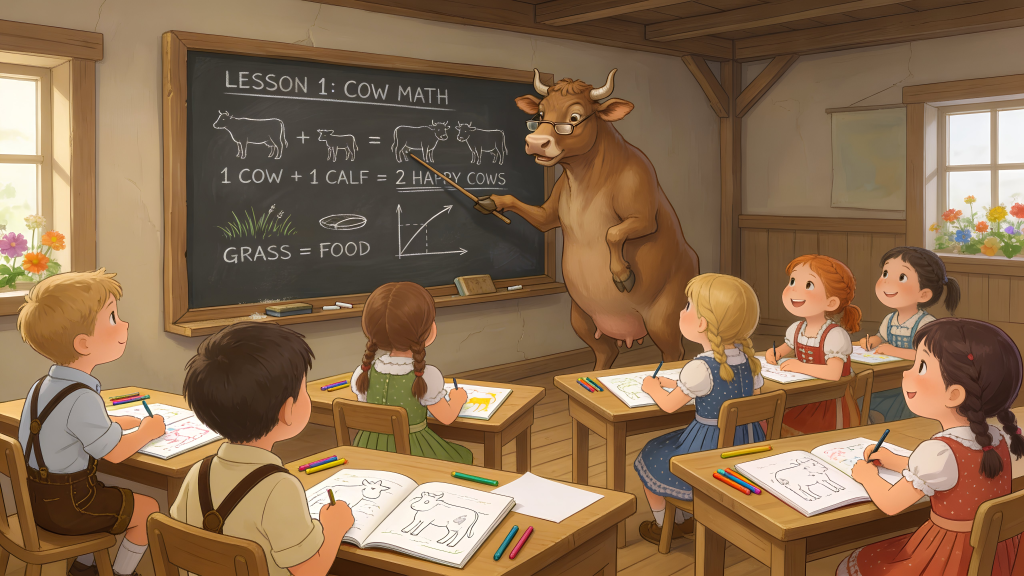
Why Cow Behaviour Facts Matter for Children
Most children grow up seeing cows from a car window. They know cows make milk, eat grass, and live in fields. That is roughly the standard summary. What they are usually never told is that cows are highly social, deeply memorious, surprisingly emotional, and remarkably observant — and that is exactly the kind of thing that turns a child from someone who passes a paddock to someone who notices it.
Good cow behaviour facts do two things. They satisfy childrens natural curiosity about animals, and they gently teach the broader truth that animals — even the ones we see every day — have rich inner lives we tend to underestimate. A child who knows that cows have best friends will be a kinder, more thoughtful child around every animal they encounter from that day forward.
British/Australian author Jaz Hoy spent considerable time researching real cow behaviour before writing the Veronica books. Veronica is clever in the books because cows are clever in reality. The cow behaviour facts below underpin every story in the series.
6 Cow Behaviour Facts That Will Surprise You
1. Cows Make Decisions as a Herd
Cows are surprisingly democratic. Research has observed cow herds reaching group decisions about when to move, where to graze, and where to lie down — and they do it through subtle body language, position, and direction of gaze. There is no single leader. The herd reaches consensus together. This is one of the cow behaviour facts that genuinely surprises teachers, because it mirrors how good classrooms function at their best.
2. Cows Have Distinct Personalities
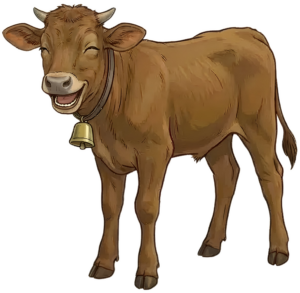
No two cows behave the same. Some are bold, some are shy, some are curious, some are cautious, some are sociable, and some prefer their own company. Farmers who work with cows day after day can identify individual cows by personality alone — without needing to see the markings or the ear tag. The Veronica books rest entirely on this fact: Veronica, Otto, Greta, Seppi, Liesel, Pip and Millie all behave the way real animals with real personalities behave.
3. Cows Solve Problems
One famous study trained cows to press a panel to open a gate to a reward. When they figured it out, the cows showed measurable signs of excitement — heart rate up, behaviour energised, often skipping or jumping. They were not just pleased about the reward. They were pleased about the figuring it out. Of all the cow behaviour facts, this is the one that most reliably changes how a child looks at a cow.
4. Cows Have Empathy
Cows respond to the emotional state of other cows. When one cow is stressed, others in the herd often become stressed too. When one is calm, others settle. Mother cows are particularly attuned to their calves, and calves recognise their mother by voice from a considerable distance. This is one of the warmest cow behaviour facts to share with a child — empathy in animals is real, well-documented, and worth knowing about.
5. Cows Have Specific Preferences
Cows prefer certain humans to others. They prefer certain music to other music. They prefer some areas of the paddock to others, often returning to the same spot day after day. They prefer some grass to other grass even on the same field. This is one of the cow behaviour facts that turns a paddock into a puzzle for a child — once they know cows have preferences, they start watching for them.
6. Cows Are Genuinely Curious
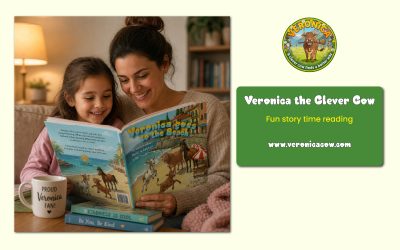
Cows will investigate new objects, new sounds, and new people — slowly, carefully, at their own pace. A new gate, a new fence post, a new dog, a strange bag left on a fencepost: all of it gets investigated. The curiosity is not random. It is methodical. This is the most charming of the cow behaviour facts to watch in real life, and it is the one behind Book 6, Veronica Goes to the Beach — Veronica’s interest in the sea is real cow curiosity in action.
How Cow Behaviour Facts Shape the Veronica Books
The Veronica the Clever Cow series is built on cow behaviour facts the way most fantasy is built on imagined worlds. Veronica behaves the way real cows behave, just with words attached. The friendships are real cow friendships. The decisions are real cow decisions. The schedule is a real cow schedule.
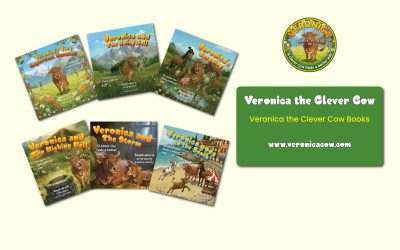
- Book 1: Veronica’s Very Important Scratch — real cow social grooming behaviour. veronicacow.com/go/scratch
- Book 2: Veronica and The Noisy Bell — real cow response to sound. veronicacow.com/go/bell
- Book 3: Veronica’s Busy Day — real cow time budgeting and the famous eight-hour eating commitment. veronicacow.com/go/busy
- Book 4: Veronica and the Wishing Well — real cow curiosity meets gentle philosophy. veronicacow.com/go/well
- Book 5: Veronica and the Storm — real cow weather sense in action. veronicacow.com/go/storm
- Book 6: Veronica Goes to the Beach — real cow exploration behaviour at the sea. veronicacow.com/go/beach
For more on welfare-based cow behaviour science, the Compassion in World Farming dairy cow welfare overview is an excellent starting point for parents and teachers wanting more detailed background.
Free Cow Behaviour Facts Resources
The free library at veronicacow.com/join includes printable cards covering all the cow behaviour facts above, colouring pages, dot-to-dots, mazes, and activity sheets designed to support both classroom discussion and home learning. The printable cow behaviour facts cards are particularly popular with primary school teachers building animal-themed units.
Premium Teacher members can unlock the full cow behaviour facts comprehension pack — discussion prompts, vocabulary builders, and lesson plans tied to each book in the Veronica the Clever Cow series. The pack works as a five-day teaching unit for early years and lower primary classes.
Browse the full character cast and supporting resources on the Meet the Characters page.
A Final Word on Cow Behaviour Facts
Cows are not boring. They are sociable, decisive, problem-solving, empathic, opinionated, curious creatures with rich inner lives and real personalities. Once a child knows that, every cow they meet from that day on becomes a little more interesting — and a little more worth being kind to.
That is the whole point of good cow behaviour facts. Not just to impress at the dinner table, but to change the way a child looks at the world.
Veronica would entirely approve.