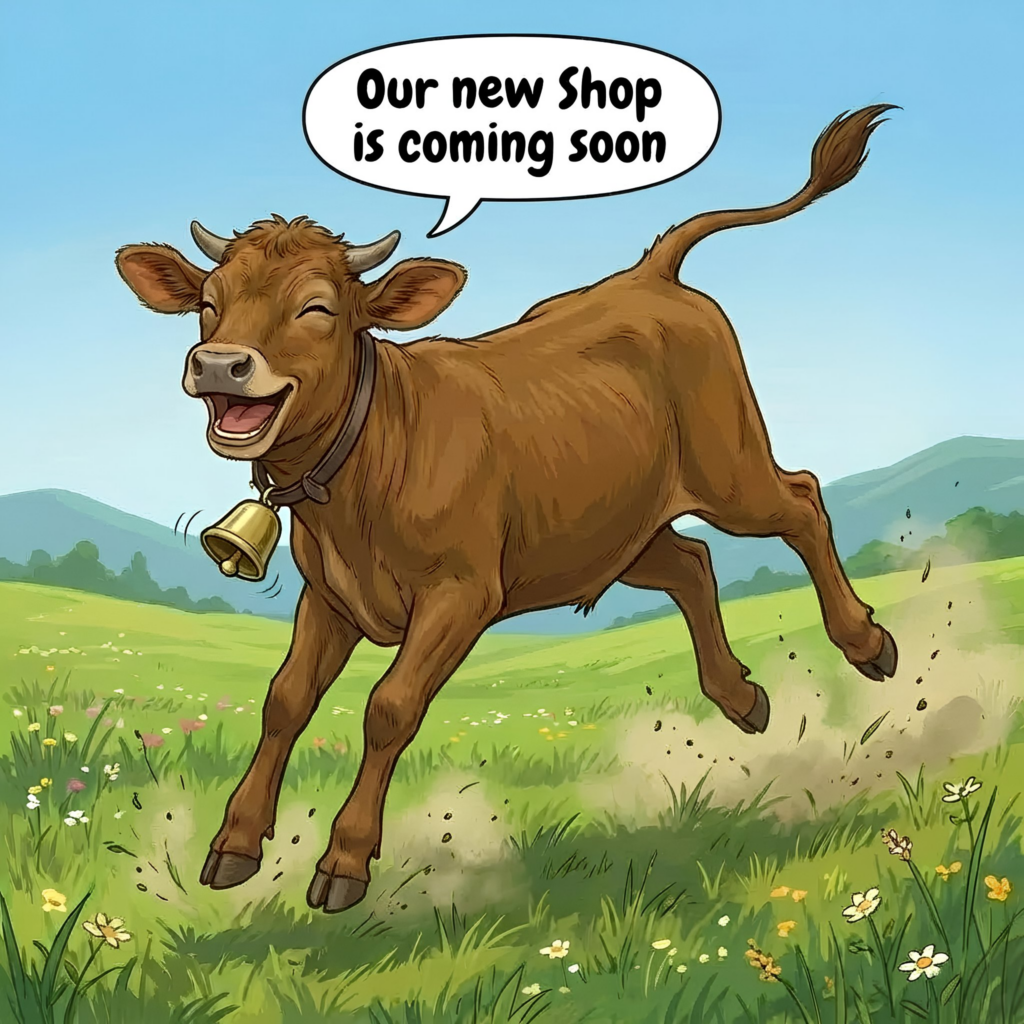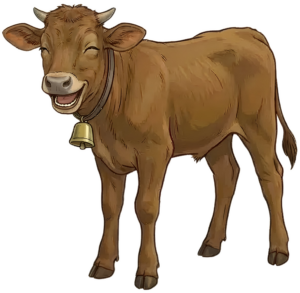
Facts about cows for kids are some of the most surprising educational content you can share with a young child. Cows are genuinely fascinating creatures, and once children start learning what cows can actually do, they tend to look at every paddock and field with completely fresh eyes.
Here are seven of the best facts about cows for kids — perfect for school projects, classroom discussion, bedtime curiosity, long car journeys past country fields, or simply impressing the grown-ups at the dinner table. Every fact below is genuine, well-documented, and gently astonishing.
Why Facts About Cows for Kids Matter
There is something quietly wonderful about teaching children to look properly at animals they think they already know. Most children grow up seeing cows in books, on milk cartons, on the sides of country roads, and in farmyard scenes in early picture books — but very few are ever taught what cows are actually capable of as living, thinking, social animals.
Good facts about cows for kids do two things at once. They satisfy childrens natural curiosity about animals, and they gently widen the way children think about the creatures around them. A child who knows that cows have best friends will treat the next cow they meet a little more thoughtfully. A child who knows that cows have brilliant memories will be a little kinder to every animal they encounter. That is a small but meaningful kind of education.
The seven entries below are all drawn from genuine animal behaviour research and welfare science. They are favourites in the free Veronica’s World library, which is packed with facts about cows for kids, character resources, printable activity sheets, and downloadable learning material designed for ages 3 to 7.
7 Charming Facts About Cows for Kids
1. Cows Have Best Friends
Research from animal welfare scientists has consistently shown that cows form close, lasting friendships with specific other cows. When best friends are separated, the cows show measurable signs of stress — their heart rates rise, their appetite drops, and their behaviour changes noticeably. Put them back together, and they calm right down within minutes. This is one of the warmest facts about cows for kids to discover, because it mirrors something every child already understands about themselves and their own friendships.
2. Cows Can Recognise Up to 100 Other Cows
Cows have excellent face recognition. Studies suggest they can identify up to 100 different cows individually, remembering which ones they like and which ones they would rather avoid. They also recognise their human carers and react differently to familiar humans than to strangers. If you have ever had the feeling that a cow is looking at you specifically — she might well be, and she will probably remember you next time.
3. Cows Produce More Milk When They Hear Calm Music
Researchers in the UK found that dairy cows produced more milk when classical or calming music was played in the barn. Fast, loud, or aggressive music had the opposite effect — milk yield actually dropped. This is one of the favourite facts about cows for kids in classrooms, because it joins beautifully across music lessons, science lessons, and animal welfare discussions all at once.
4. Cows Have Almost Panoramic Vision
A cow can see roughly 300 degrees around herself without moving her head. This is because her eyes sit on the sides of her skull rather than the front, which is the case for most prey animals. It means a cow can keep an eye on her calf, watch her best friend, and notice a strange dog at the fence — all at the same time. Children love this one because it explains why cows always seem to know exactly what is going on around them.
5. Cows Have a Strong Sense of Smell
A cow can detect smells from a considerable distance — some research suggests up to several kilometres in the right wind conditions. This is why cows often appear to know it is going to rain before anyone else does, and why they will sometimes look up and stare at a hilltop long before a human can see anything there. Their noses are working long before any cloud or visitor is visible.
6. Cows Spend Around Eight Hours a Day Eating
A cow is genuinely committed to her food. She spends roughly eight hours a day eating, and another eight hours chewing the cud — which is the second stage of her four-chamber stomach digestion process. That leaves only eight hours for everything else, which Veronica considers a perfectly reasonable distribution of time. Children find this fact deeply funny, especially when they realise it works out at about the same as a school day spent on lunch.
7. Cows Have Excellent Long-Term Memories
Cows remember things. They remember kind humans, frightening experiences, the layout of a familiar paddock, where the good grass grows in summer, and which gate they should not bother trying to open because it is always locked. Their memories last for years. This is one of the most important facts about cows for kids because it helps children understand why we should always be gentle with animals — they genuinely remember how we behaved towards them.
Where Facts About Cows for Kids Meet Story
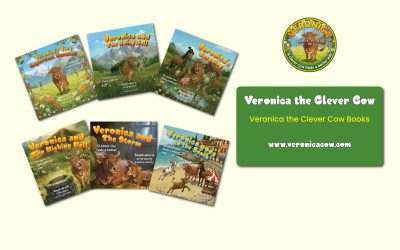
The Veronica the Clever Cow series by British/Australian author Jaz Hoy weaves real cow behaviour into gentle, warmly funny picture book stories. Veronica is clever because real cows are clever. She has friends because real cows really do. She has opinions about her schedule because real cows have very strong opinions about their schedules indeed.
Each book in the series is grounded in genuine animal behaviour and welfare science:
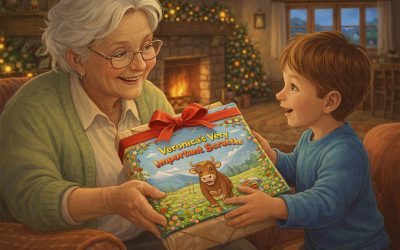
- Book 1: Veronica’s Very Important Scratch — based on real cow social grooming behaviour. veronicacow.com/go/scratch
- Book 2: Veronica and The Noisy Bell — explores how cows actually respond to sound. veronicacow.com/go/bell
- Book 3: Veronica’s Busy Day — Veronica’s eight-hour eating commitment makes a starring cameo. veronicacow.com/go/busy
- Book 4: Veronica and the Wishing Well — cow curiosity is a real and well-documented trait. veronicacow.com/go/well
- Book 5: Veronica and the Storm — cows really can sense weather changing before humans can. veronicacow.com/go/storm
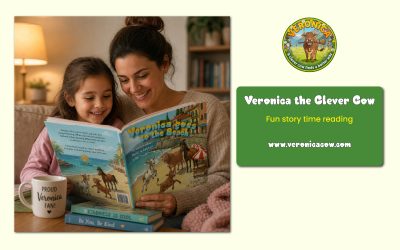
- Book 6: Veronica Goes to the Beach — Veronica’s first sea adventure draws on real cow curiosity and memory. veronicacow.com/go/beach
You can read more general background on dairy cow behaviour and welfare at the RSPCA cows information page.
Free Printable Facts About Cows for Kids
The free library at veronicacow.com/join is packed with facts about cows for kids in printable form. Cow fact cards for classroom display, colouring pages featuring Veronica and friends, dot-to-dot puzzles, mazes, spot-the-difference sheets, and themed activity packs are all included — no payment, no card, just genuinely free resources for your children to use at home or in school.
Premium Teacher members can unlock the full comprehension pack — discussion questions, vocabulary builders, and structured lesson prompts designed for early years and primary classrooms. The packs are all built around the kind of facts about cows for kids that genuinely stick with young readers and lead to richer conversations about animals and the natural world.
Browse the full character cast and the supporting resources for each book on the Meet the Characters page.
A Final Word on Facts About Cows for Kids
Cows are not boring background animals. They are clever, social, opinionated, brilliantly-memoried creatures with strong friendships, almost-panoramic vision, and surprisingly sophisticated emotional lives. Once a child knows that, every cow they meet from that day forward becomes a little more interesting.
Veronica would approve.