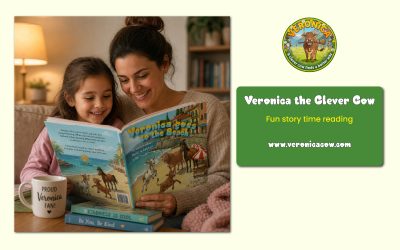
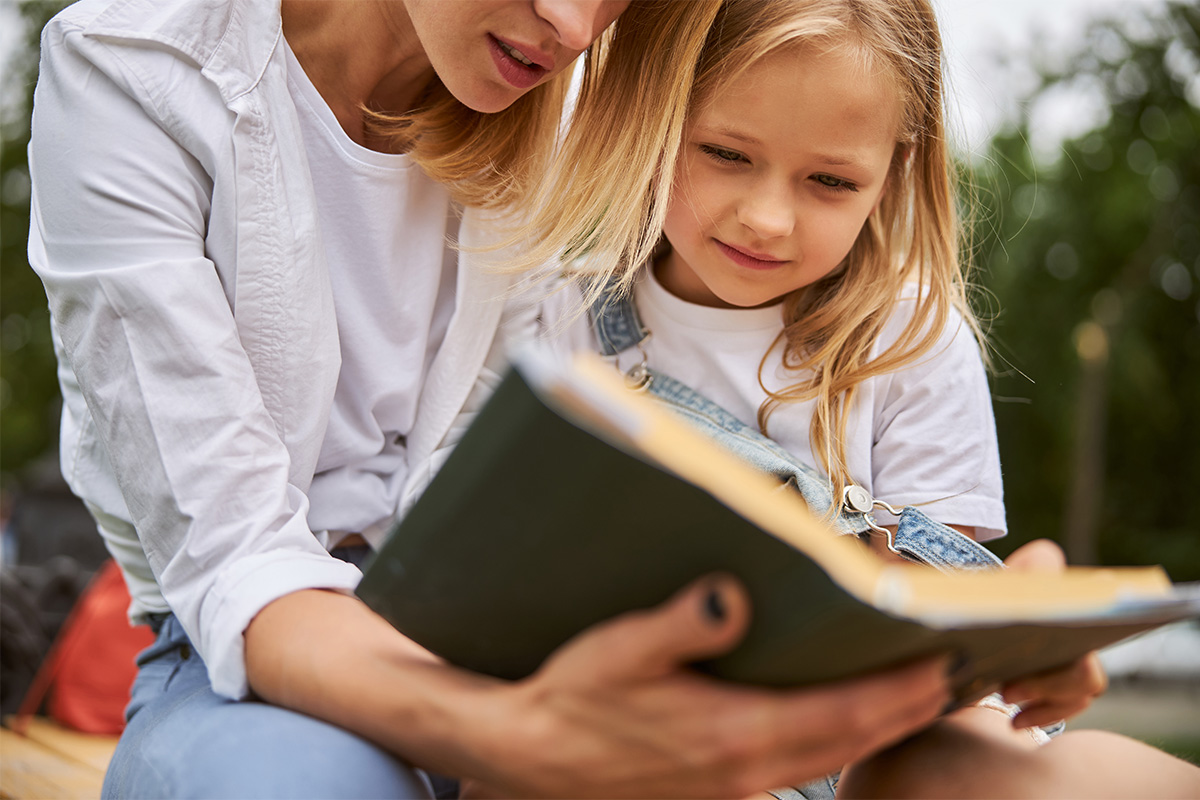
Reading aloud with children is one of the most powerful things you can do for their development — and if you are looking for simple ways to make reading aloud with children even more effective, these five tips will make an immediate difference.
The research is clear and consistent. Children who are read aloud to regularly develop stronger vocabularies, better comprehension, longer attention spans, and a more positive relationship with books. None of this requires expensive resources or special training. It requires time, consistency, and a willingness to do the voices.
Reading Aloud with Children — 5 Tips That Actually Make a Difference
1. Do the Voices — Even If You Feel Ridiculous
You will feel ridiculous. Do it anyway. Children are not judging your performance. They are completely delighted by it. The moment you give Veronica a different voice from Otto, the story stops being words on a page and becomes a world they can inhabit.
It does not have to be good. It has to be committed. A wobbly attempt at an Austrian cow accent is worth infinitely more than reading in a flat monotone.
2. Let Them Turn the Pages
This small act gives children a sense of ownership and agency over the story. They are not passengers — they are participants. Children who feel involved in the reading process engage more deeply with the content and ask more questions.
It also slows things down, which is not a bad thing. Some pages deserve to be looked at for longer than the words alone require.
3. Ask Questions as You Go
Pause occasionally and ask what your child thinks will happen next. Ask why they think a character made a particular choice. Ask what they would do in the same situation.
These moments are where real comprehension develops. When Veronica is trying to solve a problem, the question ‘What would you do?’ is genuinely interesting — and children’s answers are frequently surprising.
You do not need to ask questions on every page. Once or twice per book is enough to shift reading from passive to active.
4. Read the Same Book More Than Once
Children learn through repetition in a way that adults often find baffling. The tenth reading of the same book is not the same experience as the first — it is richer, more confident, and more deeply understood. Children notice new things on repeated readings. They begin to anticipate what is coming. They feel the pleasure of knowing.
If your child wants to hear the same Veronica book for the fifth night running, this is not a problem to be solved. It is a sign the book is doing its job.
5. Let Them Pick the Book
Even if they choose the same book every night for two weeks. Even if they choose a book you find slightly tedious by the fourth reading. The act of choosing builds investment in the reading experience.
Children who are allowed to choose their own books develop a more positive relationship with reading independently. The goal of reading aloud is not just to get through the book — it is to build a child who wants to read.
Why the Veronica the Clever Cow Series Is Designed for Reading Aloud
Every book in the Veronica the Clever Cow series is written with the read-aloud experience in mind. The rhythm of the sentences is calibrated for reading out loud. The humour lands differently when heard than when read silently. The characters have distinct personalities that reward being given distinct voices.
You can explore the full book series here and find free reading extension activities in the Veronica’s World free library — all completely free, all designed to extend the reading experience beyond the page.
Veronica would like you to know that she has reviewed all five tips and considers them excellent. Otto agrees, though he would never say so unprompted.